
📋 Product Overview
The ABB SACO 16D3 (Ordering Code: RS 811 163-AA / Configuration: SACO16D3AA358) is a high-density, 16-channel digital alarm annunciator unit designed for centralized visual and audible alarm supervision in power plants, electrical substations, and heavy industrial facilities. Operating as a standalone annunciator or integrated into larger supervisory systems, it provides reliable alarm channel monitoring with clear LED visual target displays and configurable operational sequences.
Engineered with high noise immunity and flexible signal parameterization, the SACO 16D3 processes field contact signals, drives local/remote alarm relays, and supports serial communication links for master control systems, ensuring continuous plant supervision and rapid fault identification.
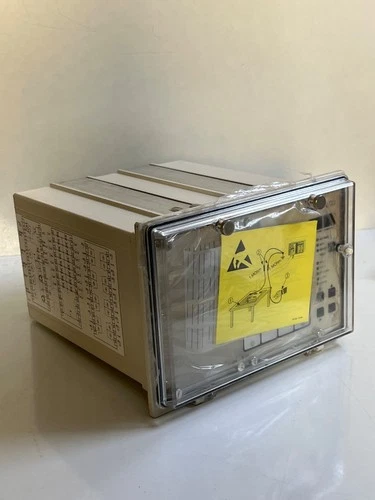
📊 Technical Datasheet
| Parameter | Value |
| Brand | ABB |
| Model Number | SACO 16D3 |
| Part / Ordering Code | RS 811 163-AA (SACO16D3AA358) |
| Product Series | SACO Annunciator Series |
| Product Description | 16-Channel Digital Alarm Annunciator Unit |
| Condition Status | Factory Surplus / Pre-Owned Industrial Equipment |
| Dimensions (W x H x D) | 224 mm x 144 mm x 222 mm (19″ Rack / Panel Mount) |
| Approximate Weight | 2.8 kg (6.17 lbs) |
| Country of Origin | Finland |
| Operating Power Supply | 80–265 VDC / 80–265 VAC Nominal (Auxiliary Power) |
| Power Consumption | Max. 18 W |
🚀 Initial Operation Checklist
🔍 Visual Structural Inspection: Inspect the front display window, channel LED matrix, rear terminal connections, and enclosure casing for physical damage or loose components.
⚡ Auxiliary Power Verification: Measure the auxiliary supply voltage across input power terminals to ensure it falls within the 80–265 VDC/VAC operating range prior to energizing.
🔌 Terminal Block Wiring Check: Verify that channel input contact wires, signal common lines, and output relay contact terminals are firmly secured without bare exposed wires.
🖥️ LED & Lamp Test Execution: Apply power and press the front panel “Test” push button to verify that all 16 channel LEDs and internal audible buzzers function properly.
🛡️ Earth Grounding Verification: Ensure the frame ground terminal on the rear panel is connected to protective earth to guard against high-frequency electrical noise.
🛠️ Daily & Routine Maintenance
🧹 Wipe the front display panel and pushbuttons regularly using a dry, soft lint-free micro-fiber cloth; do not use liquid solvents or abrasive cleaners.
🔩 Periodically check rear terminal screw tightness and panel mounting clamps to counter vibration from surrounding switchgear panels.
🌡️ Ensure ventilation slots around the module casing remain clear to maintain normal convection cooling within the control cabinet.
📦 Store spare annunciator units inside sealed anti-static ESD bags in a dry, temperature-controlled environment.
🔧 Troubleshooting & Fault Diagnosis
❌ No Display / Power LED Off: Check the incoming auxiliary power feed, verify supply line fuses, and ensure proper seating of the rear power terminal block.
⚠️ Channel Fails to Alarm on Field Trip: Verify field contact logic type (Normally Open NO / Normally Closed NC) programmed for that specific channel, and measure voltage across field signal terminals.
⚡ False Alarms / Signal Chatter: Inspect field signal cabling for high electromagnetic interference (EMI); verify shielding continuity and contact debounce time settings.
🔘 Communication Failure to Master System: Check serial communication cable connections (RS-485 / SPA-bus), verify baud rate settings, and confirm correct slave node addressing.
⚠️ Safety Guidelines & Warnings
⚡ High Voltage Hazard: Isolate all external control voltages and auxiliary power supplies before touching rear connection terminals or opening the unit enclosure.
⚡ ESD Protection: Handle internal circuit boards using grounded ESD wrist straps to prevent static damage to sensitive microcontrollers.
🔥 Overcurrent Protection: Ensure the auxiliary power input line is protected by an appropriately rated fast-acting fuse or miniature circuit breaker (MCB).
👨🔧 Qualified Technicians Only: Installation, programming parameter setup, and maintenance must only be conducted by trained electrical or instrument technicians.
❓ Frequently Asked Questions (Q&A)
💬 Q: What is the primary function of the ABB SACO 16D3 annunciator?
A: It provides 16 independent channels of visual (LED) and audible alarm monitoring for power plant and substation fault conditions, latching alarms according to standard ISA sequences.
💬 Q: Can input channels accept both NO (Normally Open) and NC (Normally Closed) field contacts?
A: Yes, each input channel can be individually configured via internal DIP switches or programming parameters to accept either Normally Open or Normally Closed potential-free contacts.
💬 Q: What does the ordering code SACO16D3AA358 specify?
A: This alphanumeric code specifies the unit configuration, including the auxiliary voltage supply range, channel LED colors, output relay mapping, and serial communication protocol options.
💬 Q: Does the unit include built-in audible signaling?
A: Yes, the unit includes an internal audible horn/buzzer and provides output relay contacts to drive external, high-decibel station alarm horns or flashers.