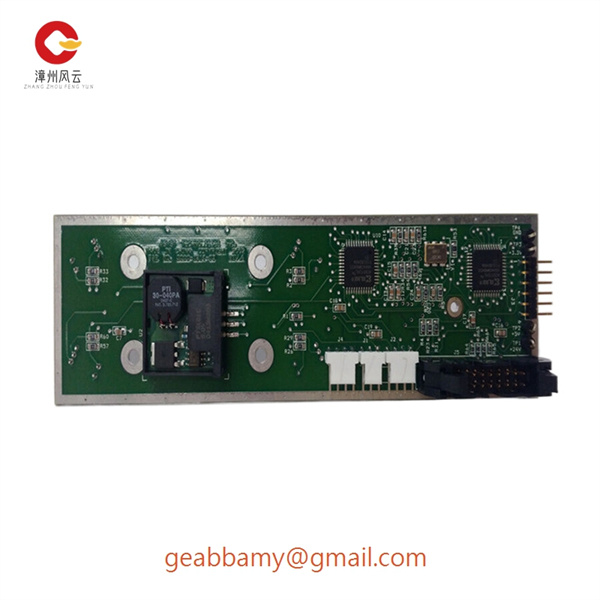



¥99,999.00 Original price was: ¥99,999.00.¥1,588.00Current price is: ¥1,588.00.
This image and price are not for reference. If you need to inquire, please contact me!
🌍Country of origin: USA France Germany Estonia Norway UK
⌚Delivery date: in stock
🛠After-sales service: brand new with one year warranty
⚙️ Product Category: Module/Controller/Server/Motor/Touch Screen
🕰Warranty: 12 months/365 days
☎️ Please contact me: 15359029662 Ms. Amy Sun
📎Chinese official website: www.dcsplcabb.com
📩Email: geabbamy@gmail.com
💬Whatsapp: +86 15359029662
If you have any products that you cannot find, you can consult anytime.


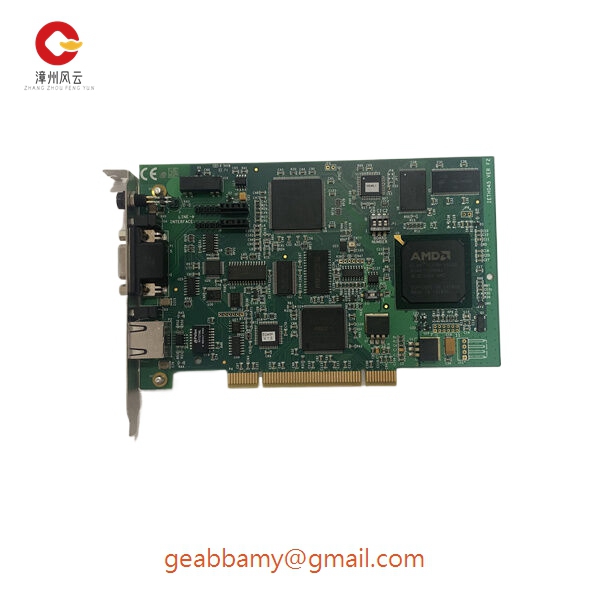
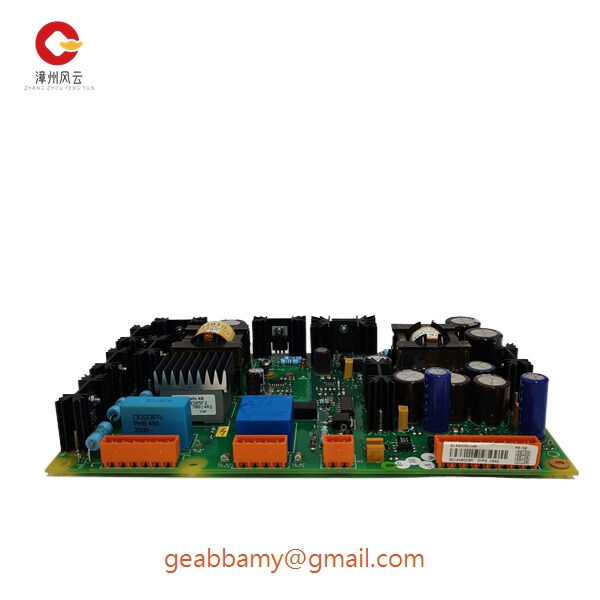
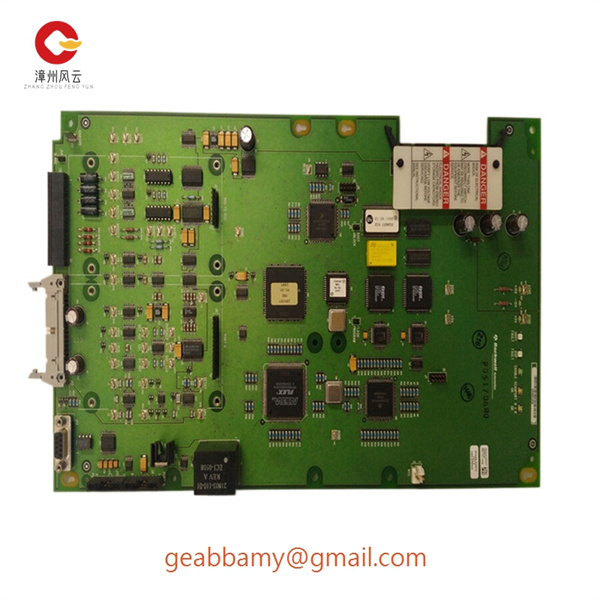
Model: 216NG61A
Part Number: HESG441633R1
Brand: ABB
Series: RE.216 / REG216 Digital Protection System
Core Function: Converts station battery DC voltage into isolated 24 V DC auxiliary power
Product Type: Auxiliary DC Power Supply Unit / DC-DC Converter
Key Specs: 36–75 V DC input range for the 48/60 V DC supply class; 24 V DC output; electrical input/output isolation
Supply Status: In stock – subject to confirmation
Stock: Available upon inquiry
Warranty: Confirm with supplier
Ship From: China
There is a technical discrepancy in the supplied product title. ABB documentation identifies the 216NG61 family as an auxiliary DC power supply, not a processor unit. The REG216 processor unit is identified separately as 216VC62a.
For accurate purchasing and system integration, list this item as an auxiliary power supply rather than a CPU or processor board.
rms-dcs.com+1
Manufacturer: ABB
Model: 216NG61A
Ordering Number: HESG441633R1
Product Series: RE.216 / REG216
Module Category: Auxiliary DC Power Supply
Converter Type: DC/DC Converter
Rated Input Class: 48 V / 60 V DC station battery
Input Voltage Range: 36–75 V DC
Output Voltage: 24 V DC
Electrical Isolation: Input-to-output galvanic isolation
Redundancy: Supports redundant configurations within the 216NG6x power supply architecture
Installation: ABB RE.216 equipment rack
Internal Distribution: Supplies the 24 V auxiliary power buses
Protection: Refer to the exact hardware datasheet for detailed overload and short-circuit characteristics
Firmware: Not applicable as a programmable CPU module
The 216NG61, 216NG62, and 216NG63 variants serve different station battery voltage classes. Do not select them by model similarity alone.
Sertec Relay Services+2
In power generation and high-voltage substation protection systems, auxiliary DC power is essential for keeping protection electronics operational. If the station battery supply fails or the DC/DC converter develops an internal fault, the protection rack may lose its 24 V auxiliary supply. This can affect generator protection, signal processing, and tripping-related functions.
The ABB 216NG61A addresses this requirement by converting station battery voltage into an isolated 24 V DC supply for the RE.216 protection equipment.
1. Power Generation – Generator Protection
Installed in REG216 generator protection systems to supply electronic protection modules. Reliable auxiliary power is essential for maintaining generator protection functions.
2. High-Voltage Substations – Protection Cabinets
Supplies the internal electronic equipment in RE.216 protection racks used for electrical fault monitoring and protection.
3. Thermal Power Plants – Generator and Transformer Protection
Supports auxiliary power distribution for protection electronics monitoring generator and transformer operating conditions.
4. Hydropower Plants – Generator Protection Equipment
Used in protection cabinets where station battery power supplies the electronic protection system.
5. Industrial Power Distribution – Electrical Protection Systems
Supports existing ABB protection installations where replacement of the complete protection rack would be expensive and time-consuming.
Before installing a replacement 216NG61A, check the following:
Confirm the station battery voltage is within the 36–75 V DC input range.
Verify the rack uses the correct 216NG61 power supply configuration.
Check the 24 V DC distribution buses.
Inspect the B448C parallel bus and associated connections.
Confirm whether the rack uses one or two redundant power supply units.
Check the plug-in jumper positions for the intended single or redundant supply arrangement.
Verify the rack-specific wiring drawings before reconnecting the unit.
Station Battery
48 V / 60 V DC nominal
ABB 216NG61A
DC/DC conversion and electrical isolation
24 V DC Auxiliary Distribution
USA / USB supply buses
216VC62a
Processor unit
216EA61
Analog input
216AB61
Binary output
216DB61
Binary input / tripping
Conceptual architecture based on ABB RE.216 documentation. Actual rack configuration depends on the plant-specific drawings.
For this type of protection-system power supply, checking the input and output voltages is only the beginning. The redundancy arrangement and electrical isolation also deserve attention.
1. Incoming Inspection
Verify the manufacturer label and HESG441633R1 ordering number.
Record the serial number and hardware identification.
Inspect the housing, connectors, and circuit board.
Check for corrosion, damaged contacts, overheating marks, or previous repairs.
Verify supplied accessories and available documentation.
2. Functional Testing
Use a compatible ABB RE.216 equipment rack or an approved DC/DC converter test fixture.
Apply a controlled input voltage within the specified range.
Measure the 24 V DC output.
Check input and output status indicators where fitted.
Verify operation under an appropriate load.
Test the intended redundant supply configuration when supported by the test setup.
Record output voltage stability and temperature during extended operation.
3. Electrical Inspection
Measure input and output voltage.
Check output polarity.
Verify electrical isolation using an appropriate manufacturer-approved procedure.
Inspect grounding and connector continuity.
Check for abnormal current consumption.
4. Hardware Verification
Record the complete product identification.
Photograph relevant jumper configurations.
Verify the correct input voltage variant.
Record the hardware revision.
5. Final Inspection and Packaging
Complete the inspection record.
Place the module in an antistatic bag.
Add protective cushioning.
Attach a QC identification label.
A test report and inspection photographs can be provided where available. Actual functional testing should be documented for the individual unit.
The 216NG6x family includes three principal auxiliary supply variants. They share a general application within the RE.216 architecture, but their input voltage ranges differ.
1. ABB 216NG61 – 216NG61A
Compatibility: Closest replacement family.
Input voltage: 36–75 V DC.
Output voltage: 24 V DC.
Application: 48 V / 60 V station battery systems.
Engineering action: Confirm exact ordering number, hardware revision, and jumper arrangement.
2. ABB 216NG62 / 216NG62A
Input voltage: 82.5–156 V DC.
Rated battery class: 110 V / 125 V DC.
Output voltage: 24 V DC.
Application: RE.216 racks using higher-voltage station batteries.
Engineering action: Not a direct replacement for a 48 V / 60 V installation without checking the station battery and complete supply design.
3. ABB 216NG63 / 216NG63A
Input voltage: 165–312.5 V DC.
Rated battery class: 220 V / 250 V DC.
Output voltage: 24 V DC.
Application: High-voltage station battery systems.
Engineering action: Not a direct replacement for 216NG61A in a 48 V / 60 V system.
| Model | Input Voltage | Compatibility |
|---|---|---|
| 216NG61 / 61A | 36–75 V DC | Same voltage class |
| 216NG62 / 62A | 82.5–156 V DC | Different supply class |
| 216NG63 / 63A | 165–312.5 V DC | Different supply class |
Engineering recommendation: When replacing a failed 216NG61A, prioritize the same model and complete ordering number. Do not substitute a 216NG62 or 216NG63 simply because the output is also 24 V DC.
Price differences and replacement labor should be established from actual supplier quotations and the site configuration rather than assumed percentages.
The following procedures help maintenance engineers determine whether the 216NG61A is responsible for a power supply failure.
| Fault Symptom | Possible Cause | Module Relevance | Recommended Check |
|---|---|---|---|
| No 24 V DC output | Internal converter failure | High | Measure output voltage |
| Input indicator off | Missing station battery supply | Medium | Check input terminals |
| 24 V output unstable | Overload or internal fault | High | Measure output under load |
| Rack modules lose power | Auxiliary supply failure | High | Inspect USA/USB buses |
| Redundant supply alarm | One supply unit failed | High | Check both supply units |
| Intermittent power interruption | Loose connection or supply fluctuation | Medium | Inspect terminals and wiring |
| Protection rack unavailable | Power distribution fault | Medium | Check rack-wide supply |
1. No 24 V DC Output
Relevance: High.
Inspection steps:
Check the station battery voltage at the designated input terminals.
Confirm the voltage falls within 36–75 V DC.
Inspect the input fuse and wiring.
Check the input and output status indicators.
Measure the 24 V DC output at the designated terminals.
If the input is correct but the output remains absent, investigate the converter.
Do not immediately replace the unit before verifying the station battery supply.
2. Repeated 24 V DC Supply Alarms
Relevance: High.
Check:
Input voltage stability.
Output loading.
Connector condition.
Overload or short-circuit conditions.
Redundant supply configuration.
Jumper positions A and B.
A fault in the connected load can cause the same symptoms as a defective power supply.
3. Redundant Power Supply Failure
Relevance: High.
For racks equipped with two 216NG6x units:
Identify the primary and redundant supply arrangements.
Check the status of both power supply units.
Verify their input supplies independently.
Inspect the USA and USB auxiliary supply distribution.
Check the rack-specific jumper configuration.
Investigate the failed supply before restoring the redundant arrangement.
4. Entire Protection Rack Loses Power
Relevance: High, but investigate the upstream supply first.
Recommended checks:
Measure station battery voltage.
Inspect DC distribution protection.
Check the 216NG61A input connections.
Inspect the 24 V output distribution.
Check the B448C parallel bus supply connections.
Verify whether the second redundant power supply is operating.
5. Power Supply Overheating
Relevance: Medium to high.
Check the following:
Cabinet ventilation.
Ambient temperature.
Output load current.
Connector contact resistance.
Signs of component deterioration.
Replace the module only after excluding excessive external loading and ventilation problems.
ABB RE.216 operating instructions specify that electronic units must only be inserted or removed after switching off the auxiliary supply.
Where two redundant 216NG6x units are installed, both supplies must be switched off before removing electronic units. This is not a module to casually pull from a live rack.
For technical support, prepare photographs of the module label, input/output measurements, alarm indications, and the rack wiring diagram.
Technical reference: ABB RE.216 Operating Instructions, document 1MDU02005-EN; ABB REG216 / REG216 Classic Numerical Generator Protection documentation. Actual ordering-code suffixes and unit condition should be verified before purchase.
Sertec Relay Services+3