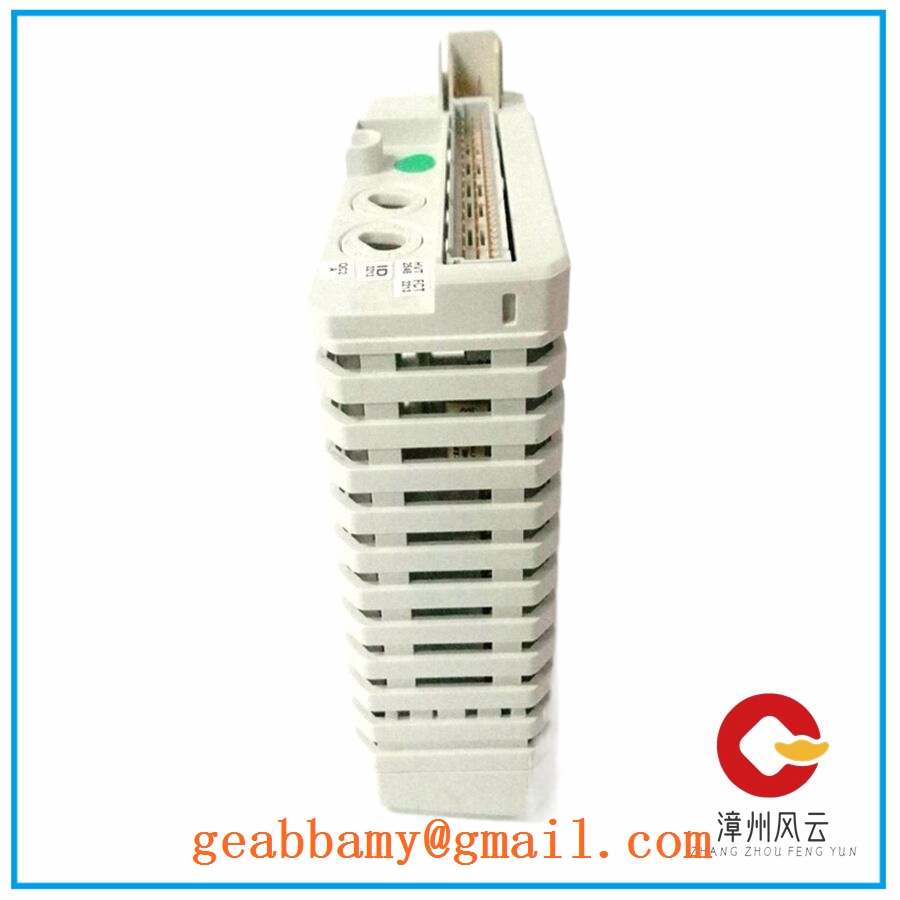

¥66,666.00 Original price was: ¥66,666.00.¥1,450.00Current price is: ¥1,450.00.
Product images and prices are not for reference. Please contact me for a quote!
🌍Country of origin: USA France Germany Estonia Norway UK
⌚Delivery date: in stock
🛠After-sales service: brand new with one year warranty
⚙️ Product Category: Module/Controller/Server/Motor/Touch Screen
🕰Warranty: 12 months/365 days
☎️ Please contact me: 15359029662 Ms. Amy Sun
📎Chinese official website: www.dcsplcabb.com
📩Email: geabbamy@gmail.com
💬Whatsapp: +86 15359029662


The Bently Nevada 2300/25-00 (23002500) is a dual-channel vibration monitor designed for continuous machinery condition monitoring and protection. It belongs to the Bently Nevada 2300 Series and supports vibration measurement, alarm monitoring, and machine protection in industrial applications.
The monitor accepts two vibration measurement inputs and one dedicated speed input. It supports compatible accelerometers, Velomitor velocity sensors, and Proximitor proximity probes, allowing users to monitor different types of rotating machinery.
The 2300/25-00 features Trendmaster SPA connectivity, Ethernet communication, Modbus integration, programmable relay outputs, and a local LCD display. It is suitable for machinery monitoring installations in power generation, oil and gas, manufacturing, water treatment, and other industrial facilities.
Its compact design makes it suitable for monitoring pumps, fans, motors, compressors, gearboxes, and other rotating equipment.
⚙️ Dual-channel vibration monitoring with synchronized sampling.
⚙️ Supports acceleration, velocity, and proximity measurement sensors.
⚙️ Dedicated speed and Keyphasor input for rotational speed monitoring.
⚙️ Trendmaster SPA interface for compatible monitoring infrastructure.
⚙️ Ethernet connectivity for configuration and system integration.
⚙️ Modbus communication for industrial control applications.
⚙️ Two programmable relay outputs for alarm and protection functions.
⚙️ Three buffered sensor outputs through BNC connectors.
⚙️ LCD and LED indicators for real-time measurement and operating status.
🔧 Inspect the monitor housing and mounting hardware for damage or looseness.
🔧 Check sensor cables, terminal connections, and grounding points.
🔧 Keep the equipment cabinet clean, dry, and properly ventilated.
🔧 Monitor vibration readings and compare current values with historical trends.
🔧 Check alarm indicators and relay status regularly.
🔧 Inspect Ethernet connections and communication stability.
🔧 Verify that sensor readings remain consistent with actual machine operating conditions.
🔧 Record abnormal vibration events and maintenance activities.
🔧 Avoid disconnecting sensors or changing configuration parameters while the machinery is operating unless an approved procedure permits it.
Q1: What does an abnormal vibration reading indicate?
Possible causes include increased machine vibration, sensor damage, incorrect sensor sensitivity, loose mounting, or wiring problems. Compare the reading with historical operating data.
Q2: Why is the vibration monitor showing a sensor fault?
Check sensor power, cable continuity, connector condition, polarity, and configured OK voltage limits. Confirm that the connected transducer is compatible.
Q3: Why is the speed reading incorrect?
Inspect the Keyphasor or speed sensor, check the sensor gap where applicable, verify pulse quality, and review the configured events-per-revolution setting.
Q4: Why is Ethernet communication unavailable?
Check the Ethernet cable, network settings, IP address, network connection, and supported communication configuration.
Q5: What should I check if the alarm relay does not activate?
Verify alarm thresholds, relay assignments, bypass settings, configuration lockout, and relay wiring.
Q6: Can the 2300/25-00 connect to a DCS?
Yes. It supports industrial communication capabilities including Modbus over Ethernet. Integration should be configured according to the host DCS requirements.
Q7: What is the difference between 2300/20 and 2300/25?
The 2300/20 provides configurable 4–20 mA output functionality, while the 2300/25 is designed with Trendmaster SPA connectivity for compatible monitoring infrastructure.
⚠️ Disconnect power before performing installation or electrical maintenance.
⚠️ Only qualified technicians should perform wiring and commissioning.
⚠️ Verify the DC supply voltage and polarity before energizing the monitor.
⚠️ Use appropriate ESD protection when handling electronic assemblies.
⚠️ Never bypass machinery protection functions without an approved maintenance procedure.
⚠️ Confirm that alarm and trip settings are appropriate for the monitored equipment.
⚠️ Use compatible sensors and follow the manufacturer’s wiring specifications.
⚠️ Verify hazardous-area certification requirements before installing equipment in classified locations. The exact 2300/25-00 approval configuration must be checked.
The Bently Nevada 2300/25-00 provides continuous vibration monitoring, alarm functionality, and machinery condition information for compatible industrial equipment. Verify sensor compatibility, communication configuration, and electrical specifications before installation or replacement.